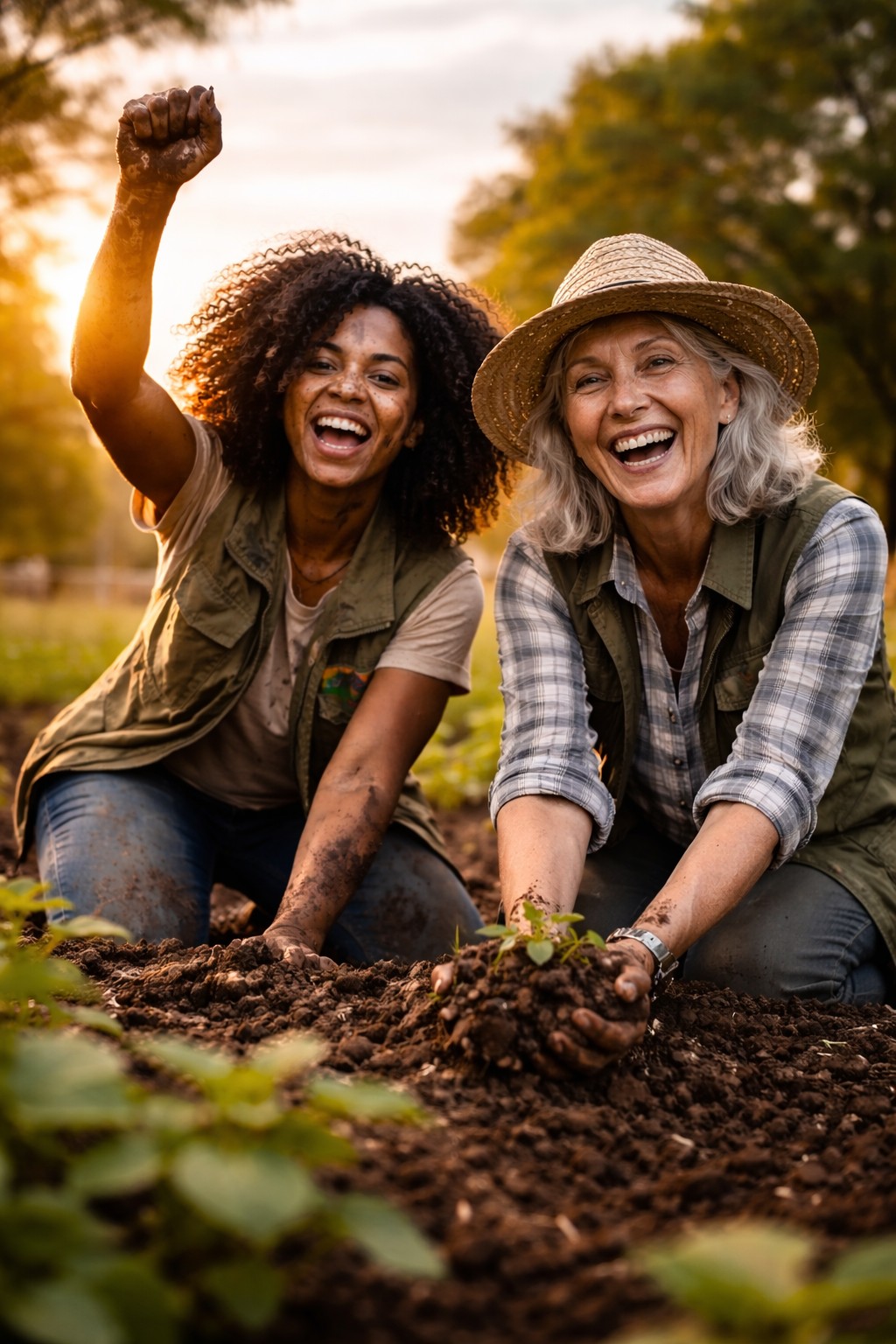
In every community, there is often someone who quietly tends the forest or field with hands in soil, nurturing its gifts, sharing knowledge, quietly understanding what each generation can rightfully take and must carefully preserve. There may also be someone who stands with fist in air to defend that same land and its biodiversity, confronting forces that would extract or consume all that there is leaving behind a barren or threatened environment. Both are environmental defenders, and if those defenders are women, then they are acknowledged in the Gender Action Plan of the UN’s COP30.
What is the UN’s COP30
This acronym describes the 30th year of the major annual UN ‘Conference of the Parties’ on Climate Change, most recently held in Belém, Brazil. Despite the fact that several world leaders of the largest emitters of greenhouse gases did not attend, and that it was the first time that the US did not even send a delegation, an important document emerged from Belém, the Belém Gender Action Plan (BGAP).
What is BGAP?
The Belém Gender Action Plan describes a framework to integrate gender equality into climate action by recognizing the intersectionality of climate and justice while emphasizing differentiated impacts on women as the environmental defender. Whether it’s visible activism ‘fist in air’ or quiet stewardship ‘hands in soil’, women often face cultural or institutional discrimination or find themselves on the frontline of threats or violence. The BGAP mandates meaningful gender-responsive measures. Implementing the plan requires commitment. There’s a need for continued focus and work.
This is where ICUUW initiatives such as leadership training, community-based project development, violence awareness and advocacy workshops come in. They assure progress towards the gender equality of women, including those that work in any capacity as environmental defenders.
ICUUW Environmental Defenders
ICUUW women have been defenders throughout the last 15 years. Here are just a few examples:
The Maasai UU Community Women’s Food Sustainability Project
Through the empowerment of women this local Maasai project led by ICUUW member Siro Wildah Kwamboka, a women’s ministry leader in Nairobi, Kenya, is committed to addressing food insecurity and poverty. Community women working together learn how to grow, harvest and prepare vegetables (corn, beans, sweet potatoes) rich in essential vitamins and minerals. The project improves nutrition for the whole family, thereby reducing cases of malnutrition and leading to food sovereignty and resilience.
In addition, the project enables women to generate income through selling surplus produce thus providing them a stronger standing in the community.
Leadership School for Transylvanian Women
Leadership training workshops were organized under the skillful coordination of ICUUW board member and UNOSZ vice president Gizella Nagy and her team of volunteers. Well-balanced three day presentations included leadership skills, personal skills, community capacity building using the Global Sisters Process, team building and conflict resolution, entrepreneurship, as well as basic grant writing. UNOSZ also carried out a separate leadership / community building training in partnership with the Association of Village and Homestead Caretakers of Romania, with a special focus on volunteering and projects that serve the development of village communities. The training was followed by volunteer actions all over Transylvania. We recently heard from a young woman how the training positively impacted her growth as a leader.
https://www.icuuw.org/what-we-do/programs/romania-hungary/projects-in-romania-and-hungary
Workshop Series on Engaging with the UN
Carmen Capriles, ICUUW member from Bolivia, provided fellow ICUUW members a series of UN advocacy engagement workshops. The four sessions of presentations and dialogues begin with a thumbnail history of the world, including a fascinating history of pandemics and wars, demonstrating the need for a United Nations. In the later sessions, Carmen offers road maps for navigating the complexities of UN advocacy. These sessions can be reviewed in the attached link.
https://www.icuuw.org/what-we-do/advocacy/csw/engaging-with-the-un-workshop-series